
Procedural Memory: What and How
Can you make trading as intuitive as riding a bicycle?

Top traders — in fact, top professionals — have developed ‘procedural memory’.
This concept is well-recognised in psychology, and was brought to the trading table by Stockbee. Developing it reduces your cognitive load (particularly when combined with chunking), and frees up brainpower to focus on other things.
In any case, if you’re trading a ‘fast’ setup, you’ll need to be able to act quickly — and with precision — to execute your strategy well. Yet, as Pradeep points out:
“New traders spend too little time developing procedural memory. Before they can develop [it], they switch to a new idea and setup.”
So, what is procedural memory, and how can traders develop it?
What is procedural memory?
Procedural memories are a type of long-term, implicit (i.e. subconscious) memory.
They require effort — conscious, explicit processes — to learn, but…
…once learnt, the memory becomes permanent, and can be operated without conscious thought.
Not all procedural memories require the same amount of effort. Furthermore, the effort required for the same memory/activity can vary depending on the person’s:
Motivation
Aptitude and intelligence
Existing skills and experience
Trading is a procedural memory at the harder end of the scale. But by taking effective actions, you can reduce the learning time.
How can traders develop procedural memory?
1. Commit to a setup
Recognise that procedural memory isn’t specific to trading as a whole, but to a specific setup.
That said, if you can master it, developing procedural memory for a related setup becomes easier. It’s like learning a foreign language or writing a book — often, the first one is the hardest.
But learning an unrelated style is difficult — which is why masters focus on their niche.
This stack explains the interplay between breakouts and EPs. Perhaps I should take things a step further and add parabolic moves and pullbacks in a future stack?
2. Do the thing
You can only learn to trade that setup by, well, trading that setup. To quote Pradeep:
“If you do a process thousands of times, you develop procedural memory.”
This is no different to learning to ride a bicycle. You can’t learn it by just reading a book about it — you have to do the thing.
Developing any procedural memory requires practice. You need to put in the reps:
“Once you develop [procedural memory], you can quickly go through 400 to 500 stocks and identify those 5 to 6 good setups. No amount of instruction […] can make you learn that skill unless you do it daily for, say, 90 to 100 days.
“Most successful traders who survive the market for many years have developed a procedural memories specific to a style of trading or a setup.
“They can instinctively trade those setups, without thinking about individual processes or steps involved in that setup. They are not conscious of the steps.
“A novice watching them trade many times does not understand their decisions. Many times they get out of a trade just before it hits a pothole or avoid certain trades that a novice will take.”
That last paragraph from Pradeep particularly hits home for me.
Take the Qullamaggie streams. When I first stumbled across them, I listened to Kristjan say stuff like:
‘Surfing the moving averages’
‘Making higher lows’
I wrote down such comments. And I’d simply categorise charts as ‘yay’ or ‘nay’, without questioning why Kristjan saw what I didn’t. That didn’t come until much later.
This struggling trader compilation is particularly good for getting insight into the gap between what a newer trader sees, and what Kristjan sees.
3. Find a structured environment
Not having a structured environment is a big one for why traders fail, or take many years to become profitable. They lack:
Step-by-step processes
Effective feedback loops
In this blog, Pradeep gives ballet and military examples of highly structured methods — the rigorous training programmes that build procedural memory and, ultimately, mastery.
Crucially, Pradeep distils the ‘essence’ of procedural memory development into:
Structured environment
Supervised practice
Extensive practice
He also attributes the high failure rate of traders to many having to learn to trade on their own. Having a good mentor — or at least a strong network — is invaluable as an aspiring trader. Ditto a good process and framework.
But you still need to do the work yourself.
4. Deliberate practice
The fastest way to grow is to do the things that stretch you.
By definition, that also means doing the things that are difficult, and which most people therefore avoid. It’s why I described deliberate practice as “the shortcut no one wants to hear”.
When you read through the various blogs Pradeep has written about procedural memory, he repeatedly focuses on setup. Commit to one, and study it deeply.
In other words, do a deep dive.
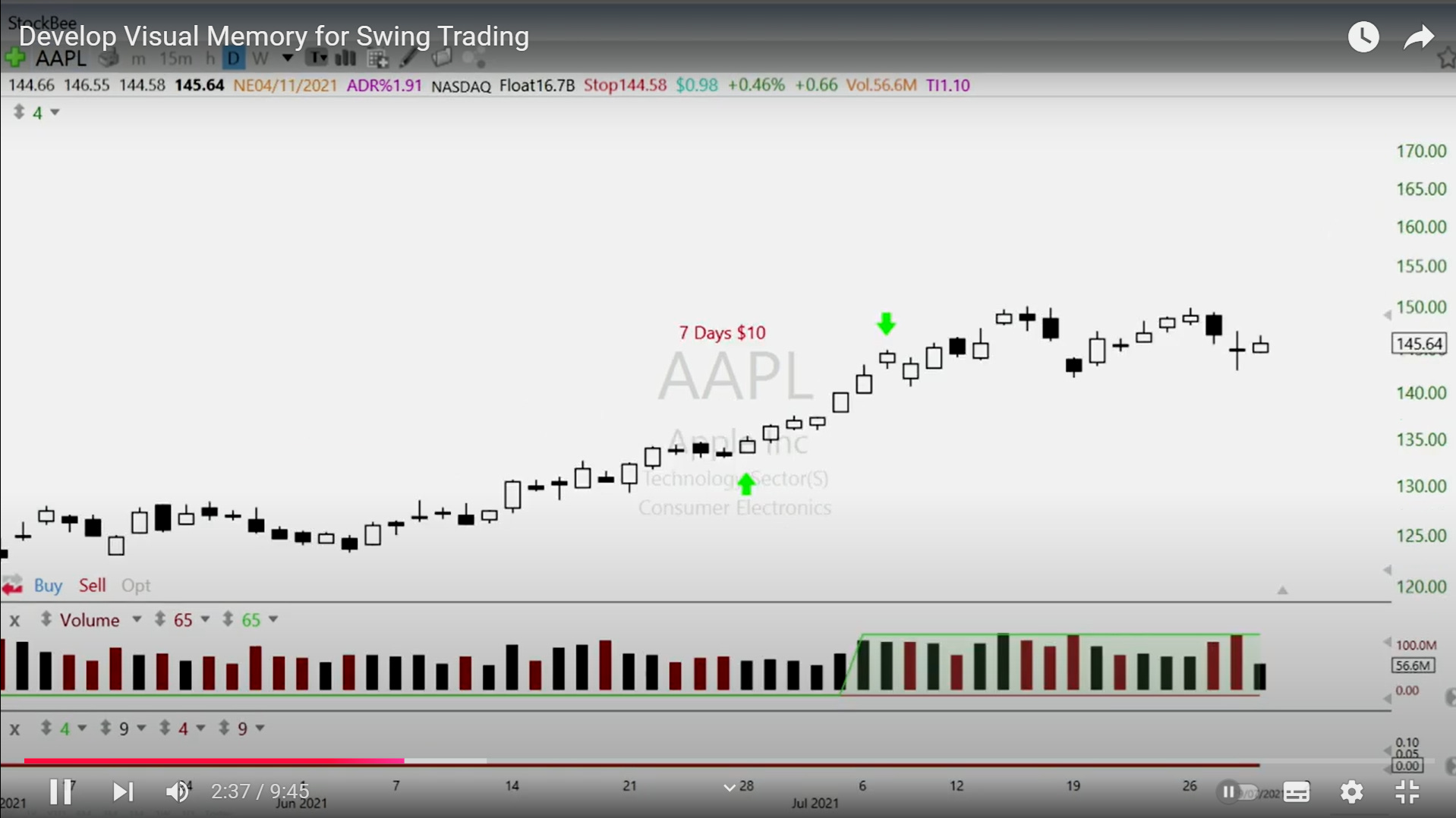
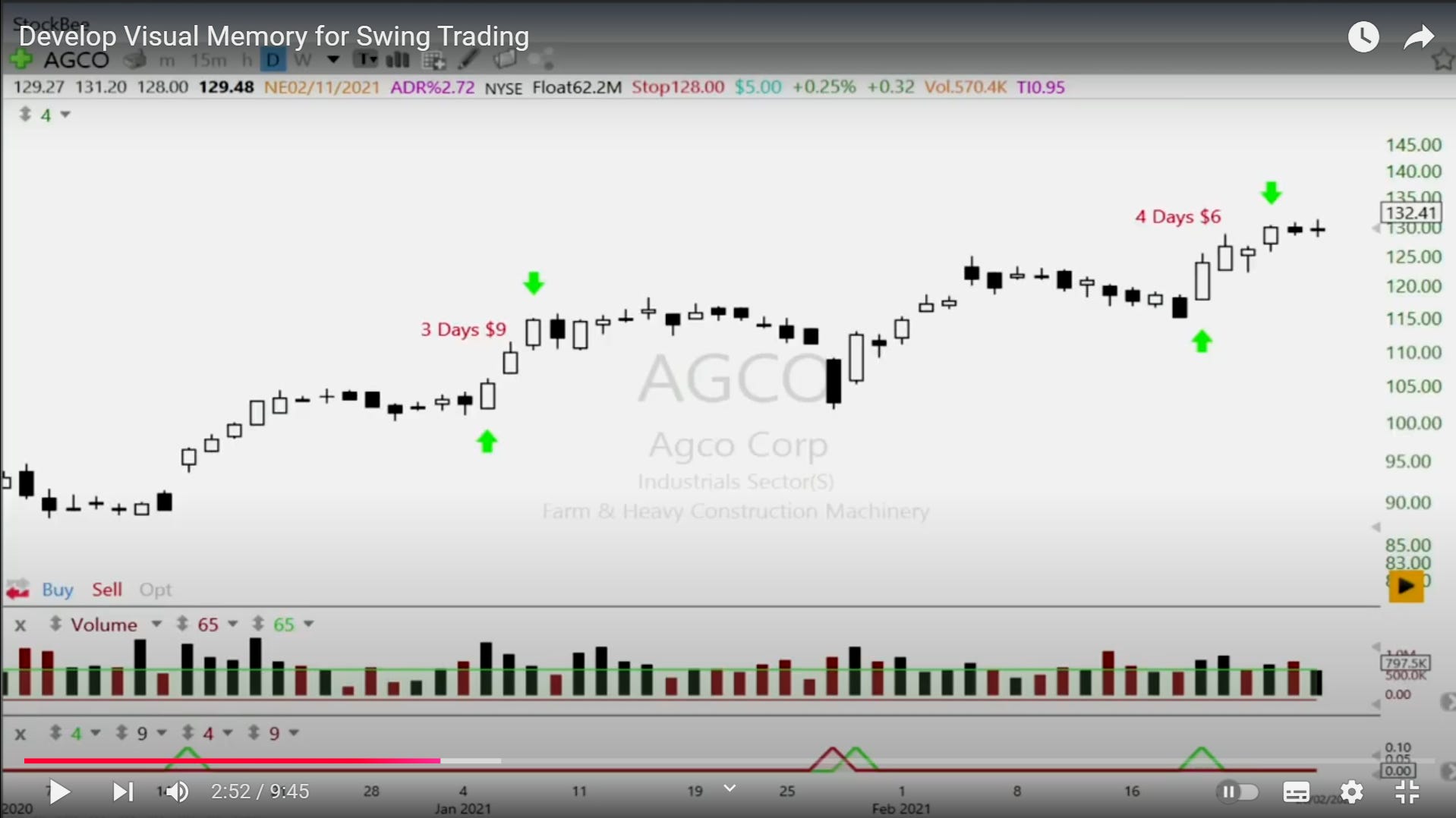
As you flip through thousands of charts, develop a model book. This allows you to develop visual memory, such that you can instantly identify setups in real time.
The above video offers several nice examples of such model books (2:24):

And from 7:09:
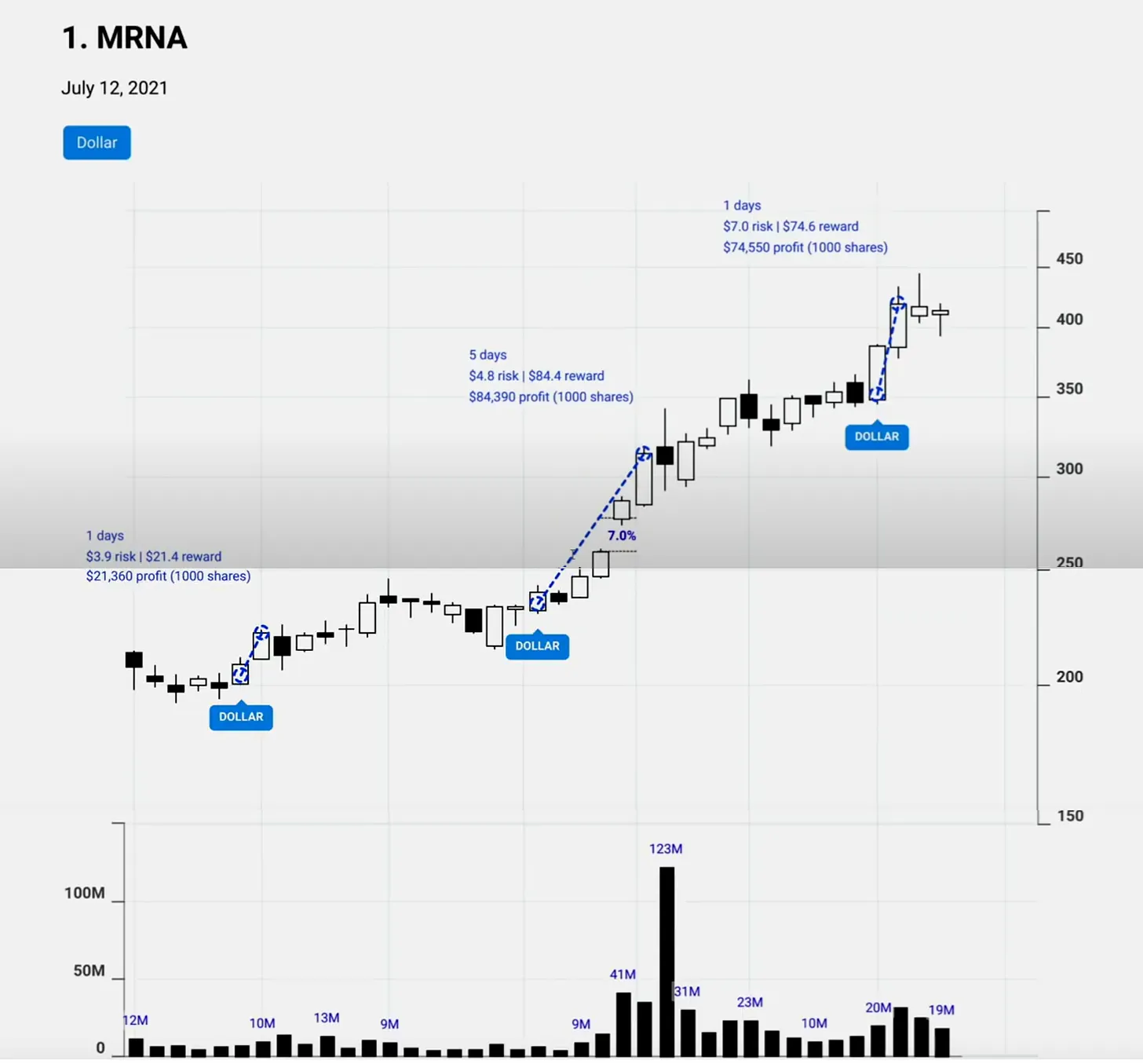
When I did my own first deep dive, I had trouble figuring out how to collect my examples in an effective way. This video gave me some great ideas for how to tackle my next deep dive!
Which brings me to my final point:
5. Work under pressure
Working under pressure is the best way to develop procedural memory rapidly.
I shared this tip in my deep dive stack, too.
When you take a bootcamp-like approach to learning — particularly where volume (reps) is key, like with a deep dive — you’ll acquire a higher level of expertise significantly quicker.
But be warned: your first deep dive will have you feeling lost and/or overwhelmed. Your second and third deep dives will take less time. And you’ll gain true mental clarity by the fourth or fifth deep dive.
I picked up the ‘bootcamp’ tip from Stockbee, but I realised its accuracy by thinking about my writing career. Multiple times, I found myself in situations where I was utterly out of my depth. In hindsight, those were also the times I learnt the most.
This forces you to work with intensity. It’s why I suggested last week to set tight deadlines. This is how you’ll work with more focus, leading to higher quality and faster work.
Again: constraint inspires creativity.
Support my work
If you find my work valuable, and would like to support future work, please buy me a coffee:
You can also help out by liking, commenting on and/or sharing this stack. They all help spread the word!
More content like this

To explore my full archive, click here.
Thanks
Very nice write up, Kyna. This aspires me to create a model book of my setup. 🙂